Elisa Lam Case: Autopsy, Elevator Video & The Full Story Behind Her Death at the Cecil Hotel
In February 2013, 21-year-old Canadian student Elisa Lam was found dead inside a rooftop water storage tank at the Cecil Hotel in Downtown Los Angeles, nineteen days after disappearing during a solo trip through California. Preceded by four minutes of unsettling elevator surveillance footage that spread rapidly across the internet, the case ignited years of murder theories, paranormal speculation, and amateur online sleuthing. The official conclusion was accidental drowning, with bipolar disorder listed as a significant contributing condition. Although investigators considered the possibility that inconsistent medication use had affected her mental state, the precise circumstances leading to her death were never conclusively established.
Few modern cases demonstrate the tension between documented forensic findings and viral internet speculation as clearly as the Elisa Lam case. Telling her story responsibly requires separating verified medical and legal records from theories and unconfirmed online claims. There is no established evidence that Elisa Lam was murdered, that another person was involved in her death, or that paranormal forces played any role. What remains is a deeply human tragedy marked by genuine unanswered questions about her final hours.
Who Was Elisa Lam?
Born on April 30, 1991, in Canada to David and Yinna Lam—immigrants from Hong Kong who had settled in British Columbia—Elisa Lam (also known by her Cantonese name, Lam Ho-yi) was 21 years old at the time of her death. She grew up in the Vancouver area, spoke both English and Cantonese, and was an undergraduate student at the University of British Columbia (UBC). Notably, contemporary records list slightly different physical measurements: LAPD missing-person notices described her as 5 feet 4 inches tall and weighing approximately 115 pounds, whereas the Los Angeles County Coroner's autopsy report recorded her height at 5 feet 6 inches and weight at 121 pounds.
Online, Lam maintained personal blogs on Blogspot and Tumblr (under the handle nouvelle-nouveau), sharing photographs, fashion inspiration, book recommendations, travel notes, and candid reflections on her emotional life. Alongside her curiosity about culture and travel, she wrote openly about periods of isolation and her ongoing struggles with mental health.
Medical records reviewed during the coroner's investigation documented a history of depression and bipolar disorder—a condition that can cause severe fluctuations in mood, energy, perception, and behavior. According to the autopsy file, Lam had been prescribed four psychiatric medications in January 2013: Venlafaxine XR (75 mg and 150 mg prescriptions), Wellbutrin XL (bupropion, 300 mg), Lamotrigine (100 mg), and Quetiapine (25 mg tablets). Her family informed investigators that she had no known history of suicide attempts and had not expressed suicidal intentions.
The Cecil Hotel's History and Transformation
In January 2013, Lam embarked on an independent "West Coast Tour" of California, traveling by Amtrak trains and intercity buses. After visiting San Diego—including the San Diego Zoo—she arrived in Los Angeles on January 26, 2013, with plans to continue north to Santa Cruz. In Los Angeles, she checked into 640 South Main Street, the address of the historic Cecil Hotel.
Constructed in the 1920s and opened around 1924–1925 with roughly 600 to 700 rooms, the Beaux-Arts building was originally designed as an upscale stopover for business travelers and tourists. Over the subsequent decades, however, Downtown Los Angeles underwent severe economic decline, and the surrounding Skid Row district became closely associated with poverty, homelessness, substance abuse, and street crime. As the neighborhood changed, the Cecil deteriorated into a low-cost transient hotel with a grim reputation for suicides, fatal overdoses, and violent deaths.
The hotel's dark lore was amplified by its past associations with notorious criminals: serial killer Richard Ramirez ("The Night Stalker") reportedly stayed on the 14th floor during his 1985 murder spree, and Austrian serial killer Jack Unterweger lodged there in 1991 while murdering sex workers in Los Angeles. By 2013, the property's operators had attempted to rebrand part of the building to attract younger international backpackers, splitting it into two concepts: the traditional Cecil Hotel floors and "Stay on Main," a budget boutique hostel occupying lower floors with a separate lobby entrance. Lam booked into Stay on Main. Four years after her death, in 2017, the City of Los Angeles designated the building a Historic-Cultural Monument due to its early 20th-century architectural significance—though no credible evidence ever linked the hotel's prior criminal history to Lam's death.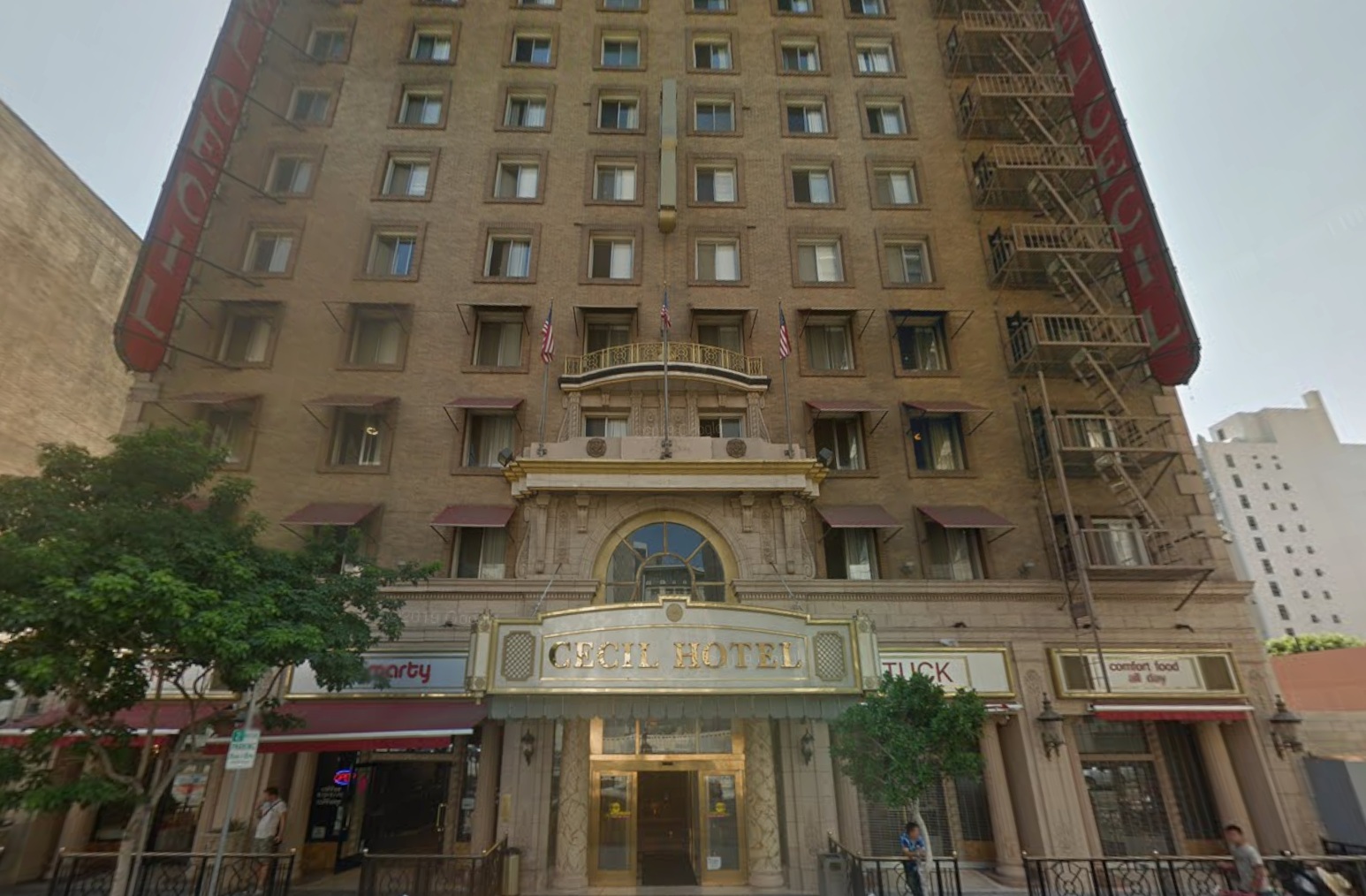
The Last Bookstore: Her Final Known Outing
When Lam first checked in on January 26, she was assigned to a shared female hostel room on the fifth floor. Between January 29 and January 30, however, her roommates complained to hotel management about unusual behavior, reportedly involving cryptic notes left on their beds and being locked out of the room. Hotel manager Amy Price subsequently moved Lam into a private single room on the same floor.
On January 31, 2013—the day she was scheduled to check out and travel toward Santa Cruz—Lam's daily phone calls to her parents in Vancouver abruptly stopped. Yet accounts from that afternoon offer a poignant human contrast to the unsettling surveillance video that would soon define her case. Staff at The Last Bookstore, an iconic independent bookshop located just a few blocks from the Cecil Hotel in Downtown LA, later recalled Lam visiting the store that afternoon. According to bookstore accounts, she appeared pleasant, talkative, and upbeat while browsing the shelves and purchasing books and gifts to bring home to her family—only to note that the books might be too heavy to carry on the remainder of her trip.
After returning to the hotel, Lam was never seen alive outside the building again. When her parents failed to hear from her, a missing-person report was filed on February 4, and the LAPD issued a public appeal on February 6. Inside her fifth-floor room, investigators found her luggage, identification, and personal belongings left behind.
The Viral Elisa Lam Elevator Video
On February 13, 2013, hoping someone might recognize Lam or come forward with tips, the LAPD released roughly four minutes of surveillance footage captured inside a 14th-floor hotel elevator (dated to the early morning hours of February 1 in the coroner's investigative report). The clip went viral globally within days, garnering more than three million views and 40,000 comments on the Chinese platform Youku alone.
What the Footage Shows vs. Online Claims
In the recording, Lam enters the elevator alone, presses multiple floor buttons, steps back, and waits. When the doors remain open, she peers cautiously into the hallway, steps back into the corner of the cab, steps out into the corridor while making fluid, unusual arm and hand gestures, and eventually walks out of camera range before the doors close. No other person appears on screen.
While various commentators have suggested that Lam may have inadvertently triggered a door-hold button on the control panel, the exact mechanical reason the elevator remained stationary has never been definitively established in public records. Similarly, the video's visual presentation sparked intense debate:
The released surveillance footage became the subject of intense online scrutiny. Viewers questioned the blurred timestamp, apparent changes in playback speed and an approximately 54-second discrepancy that they believed existed between the original recording and the publicly circulated version. However, claims that these alterations concealed a suspect or deliberately obscured evidence have never been substantiated. The precise technical explanation for every aspect of the edited footage should not be presented as established fact without supporting documentation.
Source: Wikimedia Commons – Public Domain (U.S. Government / LAPD surveillance footage).
Discovery in the Rooftop Water Tank & Water Supply Impact
For more than two weeks following the elevator recording, guests at the Cecil Hotel continued using the building's tap water for showering, washing, and brushing their teeth. By mid-February, however, multiple guests complained to hotel staff about abnormally low water pressure, black or discolored water flowing from faucets, and a strange sweet or metallic taste.
Around 10:00 AM on Tuesday, February 19, 2013, hotel maintenance worker Santiago Lopez went to the roof to inspect the building's four large cylindrical water storage tanks, each holding roughly 1,000 gallons. Climbing a fixed ladder to check the northeastern cistern—which was approximately half to three-quarters full—Lopez saw that the top metal hatch was open and discovered a human body floating face-up inside. Los Angeles Fire Department personnel responded to the roof and pronounced Elisa Lam dead at approximately 10:22 AM.
The discovery prompted immediate public health concerns and civil litigation from former guests Steven and Gloria Cott, who filed a class-action complaint in February 2013 alleging the hotel failed to provide safe water for human use. While guest complaints regarding water discoloration, taste, and odor were widely documented, public health records did not independently establish specific medical illnesses caused by the water supply.
Rooftop Access & The Water Tank: Theories vs. Documented Facts
How Lam reached the roof and entered an elevated 1,000-gallon cistern became the central logistical puzzle of the investigation. Early media reports erroneously claimed the tank hatch was locked and too heavy for one person to move. Subsequent court testimony and the Coroner's report clarified several distinct facts—while leaving the exact route unproven:
- Restricted main roof access: The interior stairwell door leading to the roof was locked and equipped with an alarm system. During later civil proceedings, hotel staff and the chief engineer testified that the alarm had not sounded during Lam's stay—and that had it been triggered, employees at the front desk and on the 14th and 15th floors would likely have heard it.
- Presence of external fire escapes: In addition to the main stairwell door, the building had three external fire escapes providing alternative physical routes to the roof without passing through the alarmed interior door.
- Reported K-9 scent dog findings: Media and investigative accounts reported that police scent dogs tracked Lam's trail on the fifth floor toward a window leading to an exterior fire escape before losing her scent. (It should be noted that the public LA County Coroner's autopsy report itself does not confirm the existence of three fire escapes or document the full K-9 search path.)
- The fire escape theory: Based on these elements, investigators and commentators theorized that Lam may have accessed the roof via an external fire escape—however, this remains a plausible theory rather than a conclusively proven reconstruction.
- An unsecured hatch: Once on the roof, a fixed ladder roughly 10 feet high led to the top of the northeastern tank platform. Both the Coroner's investigative narrative and Santiago Lopez's testimony confirmed that the tank's metal hatch was not locked, weighed roughly 20 pounds, and was resting open when her body was found. Once inside a tank that was only half to three-quarters full, the top rim would have been out of reach from the water, preventing escape.
Elisa Lam Autopsy, Toxicology & The Medication Question
The Los Angeles County Department of Coroner conducted an autopsy on February 21, 2013, and released its official report in June 2013 (Case No. 2013-01364). Lam's body showed moderate decomposition consistent with roughly nineteen days in water. She was found naked, with her clothing—a red hooded sweatshirt, a green shirt, black shorts, black underwear, and black sandals—along with her watch and hotel room key card recovered from inside the same tank.
The reason Elisa's clothing was found alongside her body remains unknown. One possible explanation discussed in relation to drowning and hypothermia is paradoxical undressing, a phenomenon in which a person experiencing severe cold may remove clothing. However, the autopsy did not establish that this occurred in Elisa's case, and investigators never conclusively determined why she was found without her clothes.
During the post-mortem examination, pathologists documented no external or internal traumatic injuries indicative of physical assault, and forensic sexual assault evidence kits were collected as part of standard investigative protocol. Toxicology testing was negative for illicit drugs, including cocaine, fentanyl, methamphetamine, MDMA, opiates, PCP, and barbiturates. Regarding alcohol, ethanol tested negative in heart blood, while a trace level of 0.02 g% ethanol was detected in bile (a finding frequently consistent with post-mortem decomposition rather than antemortem intoxication). Over-the-counter cold remedies (Sinutab and ibuprofen) were also detected.
The medication findings were nuanced: blood and liver tissue analyses detected bupropion metabolites and venlafaxine, as well as lamotrigine in liver tissue, though insufficient blood volume prevented reliable quantification of several substances, and quetiapine was not detected in the tested blood sample. While lead investigator Detective Wallace Tennelle testified in later civil proceedings that pill counts from the bottles in Lam's room suggested she may not have been taking all her prescribed doses regularly, pill counts alone do not provide conclusive proof of medication non-adherence. On June 20, 2013, the Coroner officially ruled the cause of death drowning, the manner of death accidental, and listed bipolar disorder as another significant condition.
Her Family's Perspective: Search, Grief & Legal Battle
Amid the global media frenzy surrounding the surveillance video, the quiet devastation experienced by Elisa's parents, David and Yinna Lam—who operated Paul's Restaurant in Burnaby, British Columbia—was often overshadowed. Throughout Elisa's trip, her daily check-ins had been a source of reassurance for her family. When those calls stopped on January 31, her parents immediately recognized that something was wrong, flying to Los Angeles within days to assist police and appeal for information about their daughter.
In September 2013, David and Yinna Lam filed a wrongful-death lawsuit against the Cecil Hotel, arguing that management had acted negligently by failing to adequately restrict access to rooftop hazards and failing to lock the water tank hatches. During the litigation, maintenance worker Santiago Lopez testified regarding his discovery of the body and confirmed he had not heard the rooftop alarm sound during Lam's stay.
On December 14, 2015, Los Angeles Superior Court Judge Howard Halm dismissed the lawsuit. Judge Halm ruled that the hotel had met reasonable safety standards for areas off-limits to guests and could not reasonably have foreseen that a guest would access the roof, climb a 10-foot tank ladder, lift a 20-pound hatch, and enter a water storage cistern. While the ruling closed the legal question of civil liability, it underscored how difficult it was for her family to reconcile the official accident ruling with the lack of a complete step-by-step explanation.
Online Sleuths, Pablo Vergara & Cultural Aftermath
In the years following 2013, the Elisa Lam case became a defining cautionary tale of internet true-crime culture. Online theorists pointed to coincidences with the 2005 horror film Dark Water (in which a young girl drowns in an apartment rooftop water tank), the Korean "Elevator Game" urban legend, a concurrent Skid Row tuberculosis outbreak whose diagnostic test happened to be named LAM-ELISA, and new posts appearing on Lam's Tumblr blog months after her death—a phenomenon widely noted by commentators familiar with Tumblr as consistent with the platform's automated "Queue" scheduling feature, though never verified through an official law enforcement technical audit.
The real-world harm of unchecked armchair detective work fell heavily on Mexican death-metal musician and filmmaker Pablo Vergara (known online as Morbid). Because Vergara had stayed at the Cecil Hotel a year earlier and posted dark music videos on YouTube, online sleuths falsely accused him of murdering Lam. Despite documented evidence showing he was in Mexico at the time of Lam's disappearance and death—and despite authorities clearing him of any involvement—Vergara was subjected to severe doxxing, relentless online harassment, and death threats.
In popular culture, the Cecil Hotel's dark reputation and elements reminiscent of the case helped inspire the setting and themes of the fifth season of American Horror Story: Hotel (2015), though the series was not a direct adaptation of Lam's life. In February 2021, director Joe Berlinger revisited the case in the four-part Netflix docuseries Crime Scene: The Vanishing at the Cecil Hotel. While the series examined how online communities constructed elaborate conspiracy narratives around the case, some critics—including the Los Angeles Times—noted that the documentary devoted heavy attention to the hotel's sensational mythology at the expense of keeping Elisa herself at the center of the story.
Fact-Check Summary: Documented Findings vs. Unproven Theories
| Case Element | What Is Officially Established vs. Unverified |
|---|---|
| Cause & Manner of Death | Officially ruled accidental drowning; bipolar disorder listed as a significant contributing condition. |
| Physical Trauma & Foul Play | Autopsy found no external or internal traumatic injuries; forensic kits were collected; no foul play established. |
| Toxicology & Medication | Negative for illicit drugs and heart-blood ethanol (0.02 g% ethanol in bile); prescribed psychiatric meds & OTC cold medicine detected. Pill counts do not conclusively prove non-adherence. |
| Elevator Video & Edits | Shows erratic movements, but no second person; claims of a cover-up via blurred timestamps or missing seconds remain unsubstantiated. |
| Rooftop & Tank Entry | Tank hatch was unsecured and ~20 lbs; access via an exterior fire escape is a leading theory rather than a conclusively proven route. |
| Clothing in the Tank | Found naked with clothes in the water; paradoxical undressing is a discussed hypothesis, not an established autopsy finding. |
Ultimately, recognizing the difference between a confirmed cause of death and a complete step-by-step reconstruction is essential to understanding the Elisa Lam case. While investigators established that she drowned accidentally without third-party involvement, the exact sequence of thoughts and actions that led her from a 14th-floor elevator onto the roof of the Cecil Hotel remains unknown. Beyond the viral footage and internet theories, Elisa Lam deserves to be remembered as a thoughtful, curious 21-year-old student whose life ended far too soon.
Gerelateerde artikelen
- The Menendez Brothers Case: The Shocking True Story of the Beverly Hills Murders, Alleged Abuse, and the Ongoing Fight for Freedom
- The Chris Watts Family Murders: The Disturbing True Story of the Annihilation of Shanann, Bella, and Celeste
- The Zodiac Killer: The Unsolved Mystery of America's Most Infamous Serial Killer