The Brutal Murder of Junko Furuta: The Gruesome 40-Day Nightmare That Changed Japanese Criminal Law Forever
On Friday, November 25, 1988, 17-year-old Junko Furuta was cycling home, completely unaware of the horror awaiting her after an evening shift at her part-time job in Misato (Saitama). She was an ordinary, ambitious high school senior preparing for graduation, dreaming of her future, and completely disconnected from the criminal underworld. Yet, her path tragically crossed with a ruthless group of local youths that night. What began as a cunning abduction on the street degenerated into a captivity lasting over forty days. It would go down in history as one of the most abhorrent crimes ever committed in Japan: 'The Concrete-Encased High School Girl Murder Case'.
The Ambush and the Abduction
The instigator of the tragedy was 18-year-old Hiroshi Miyano, accompanied by 16-year-old Shinji Minato. The duo was specifically looking for a victim that evening. While Furuta was cycling home, Minato intentionally kicked her off her bicycle and fled the scene. Miyano then emerged from the shadows, cunningly playing the role of a concerned, helpful bystander. He gained her trust by offering to escort her home safely.
His helpfulness was a trap. As soon as he had isolated her, Miyano revealed his true intentions. Under severe threats—claiming to have ties with the dangerous yakuza (the Japanese mafia) and threatening to harm her family—Furuta was abducted. She was eventually taken to a room on the second floor of Minato's family home in the Ayase neighborhood of Adachi Ward, Tokyo.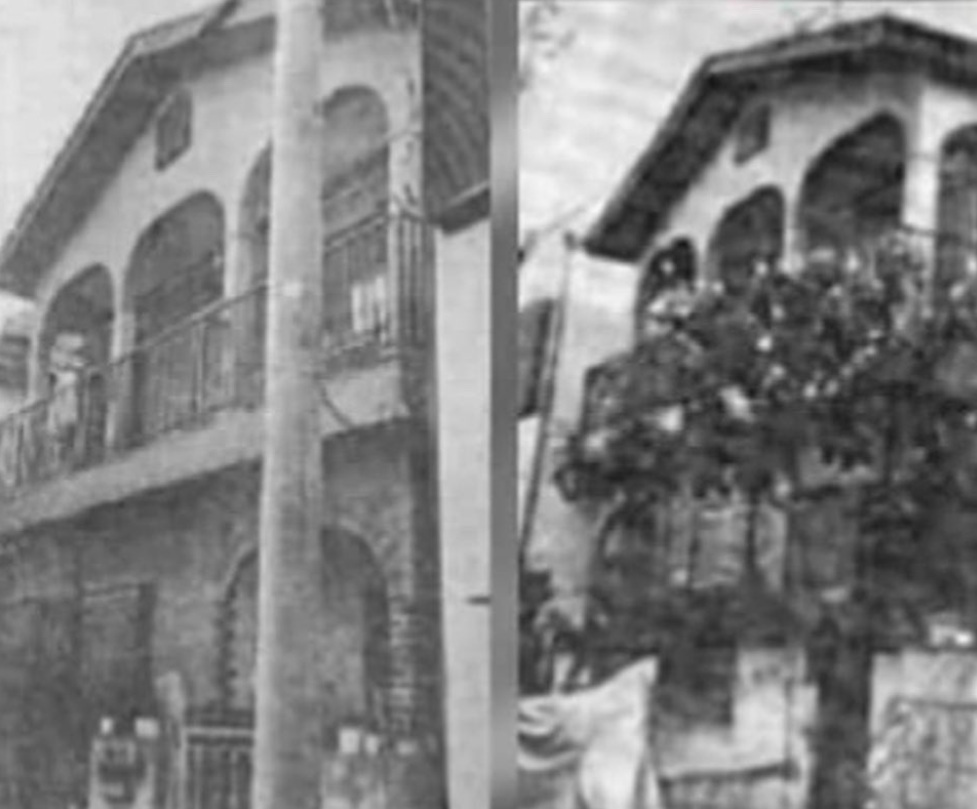
Forty Days in a Living Hell
The most chilling aspect of this atrocity was its seemingly normal setting. Furuta was not hidden in a remote forest or an abandoned factory, but in an ordinary family home in a densely populated residential area in Tokyo. Starting in the early hours of November 26, a forty-day period began in which she was subjected to indescribable physical and psychological cruelties.
Alongside Miyano and Minato, the core of the group consisted of 17-year-old Jō Ogura and 16-year-old Yasushi Watanabe. The group systematically subjected Furuta to extreme sexual violence, brutal beatings with various objects, and severe degradation. As the weeks passed, she was deliberately starved, dehydrated, and repeatedly burned with fire and cigarettes. Her physical condition deteriorated so severely that she could no longer stand on her own feet.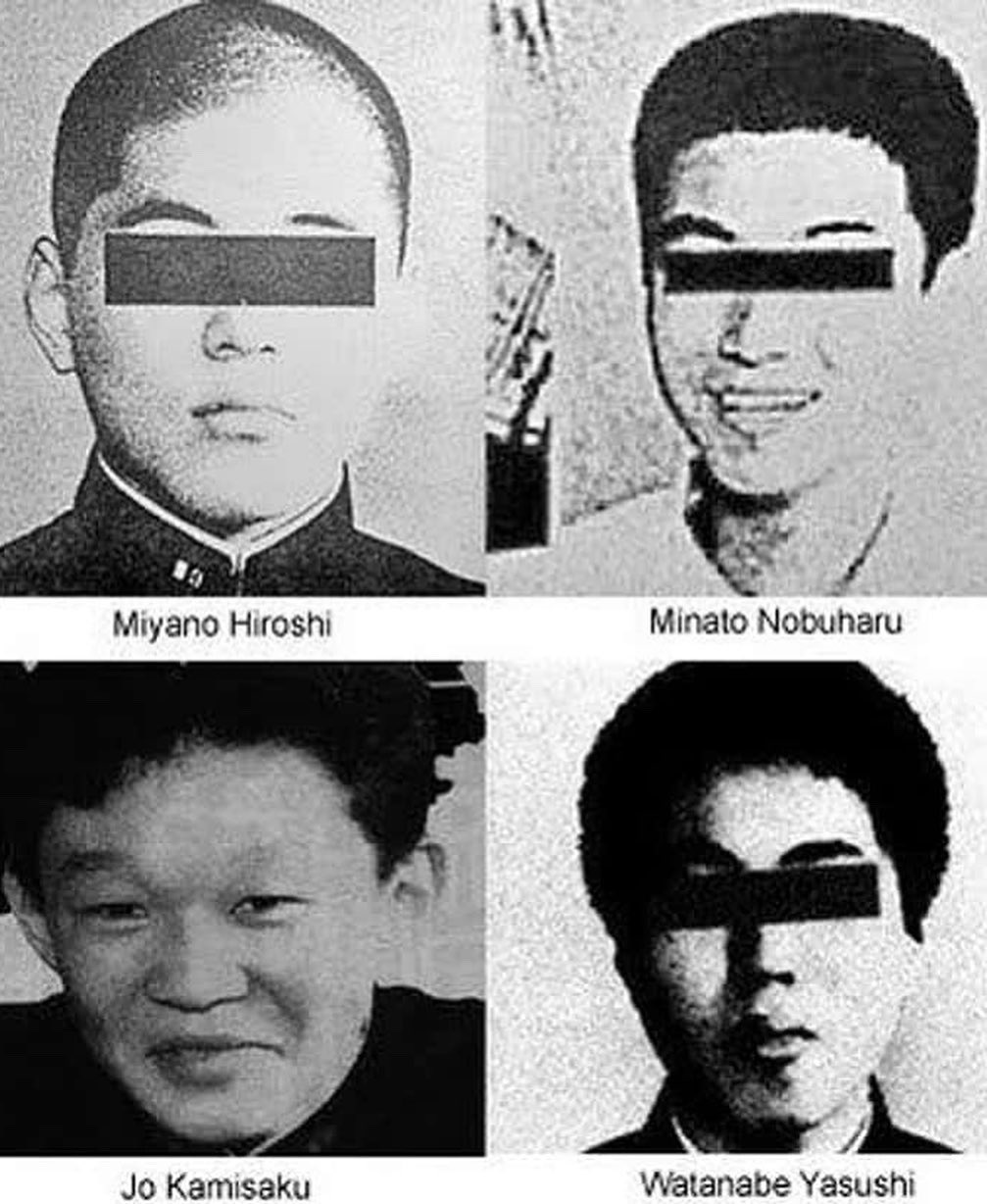
Failed Supervision and Fatal Apathy
To thwart a large-scale police investigation, the perpetrators forced Furuta to call her home. While held at gunpoint, she had to tell her parents that she had run away, that she was safe, and that they should not involve the police.
The absolute nadir of societal apathy in this case was the presence of Shinji Minato's parents. They lived in the same house during large parts of the captivity. Although aware of the presence and the deplorable condition of the girl on the second floor, they did not intervene and never called the police. They later stated that they were too terrorized by their own son and his violent, yakuza-affiliated group of friends to take any action.
The Murder and the Macabre Dump in Wakasu
In the first days of January 1989, Furuta's body neared its breaking point. Her organs were failing, and she suffered from severe internal bleeding and infections. On January 4, 1989, the violence escalated for a final time. Reportedly out of sheer frustration after losing a game of mahjong, the perpetrators vented their anger with heavy weights and flames on the severely weakened 17-year-old. After an hours-long torture session, Junko Furuta died from the resulting traumatic shock and extensive injuries.
In blind panic, the perpetrators decided to make the body disappear. They forced her lifeless remains into a large 55-gallon oil drum and filled it with wet concrete. Using a rented truck in the dead of night, they transported the extremely heavy drum to an industrial landfill in Wakasu, a reclaimed land area in Tokyo's Kōtō Ward.
Discovery and Massive Public Outrage
It wasn't until nearly three months later, in March 1989, that the case came to light. Miyano and Ogura were arrested by the police for a separate, unrelated gang rape. During the interrogations, their statements contradicted each other, and one of the perpetrators eventually cracked, confessing to the murder of the 'missing high school girl'. On March 29, 1989, detectives excavated the oil drum in Wakasu, exposing the gruesome facts of the 'Concrete-Encased High School Girl Murder Case' to the world.

Because all perpetrators were under the age of 20 at the time of the crime, they fell under Japan's highly lenient Juvenile Act, which focused heavily on rehabilitation and reintegration rather than severe retribution. In July 1991, the Tokyo High Court sentenced the perpetrators to the following terms:
- Hiroshi Miyano (Main Suspect): 20 years in prison (the maximum juvenile sentence at the time).
- Jō Ogura: 5 to 10 years in prison.
- Shinji Minato: 5 to 9 years in prison.
- Yasushi Watanabe: 5 to 7 years in prison.
A Failing System: The Perpetrators Strike Again
The public anger over these—in the eyes of the people, bizarrely lenient—sentences was unprecedented and ultimately forced Japanese politicians to significantly tighten the age of criminal responsibility and juvenile criminal law. The fact that the 'rehabilitation' of the four completely failed became painfully clear later on. After his release, perpetrator Shinji Minato was arrested again in August 2018, this time for attempted murder during an armed road-rage dispute. Jō Ogura had already been arrested in 2004 for kidnapping and assault, and died in solitude in his apartment in 2022. Yasushi Watanabe died in 2021 after years of social isolation.
The murder of Junko Furuta remains one of the most traumatic scars on Japanese society. It has become a chilling symbol of the disastrous consequences of silent bystanders, lethal youth gang violence, and a criminal justice system that failed to protect an innocent victim. To this day, flowers are regularly left at Wakasu Park to remember the 17-year-old girl who was forgotten by the world for forty agonizing days.